
Michael Burry is an American investor, hedge fund manager, and licensed physician best known for predicting and profiting from the 2008 subprime mortgage crisis, a feat chronicled in Michael Lewis’s bestselling book and the 2015 film The Big Short.
He founded Scion Capital in 2000, built one of the most remarkable track records in modern hedge fund history, and became one of the most closely watched contrarian voices in global finance.
Who is Michael Burry?
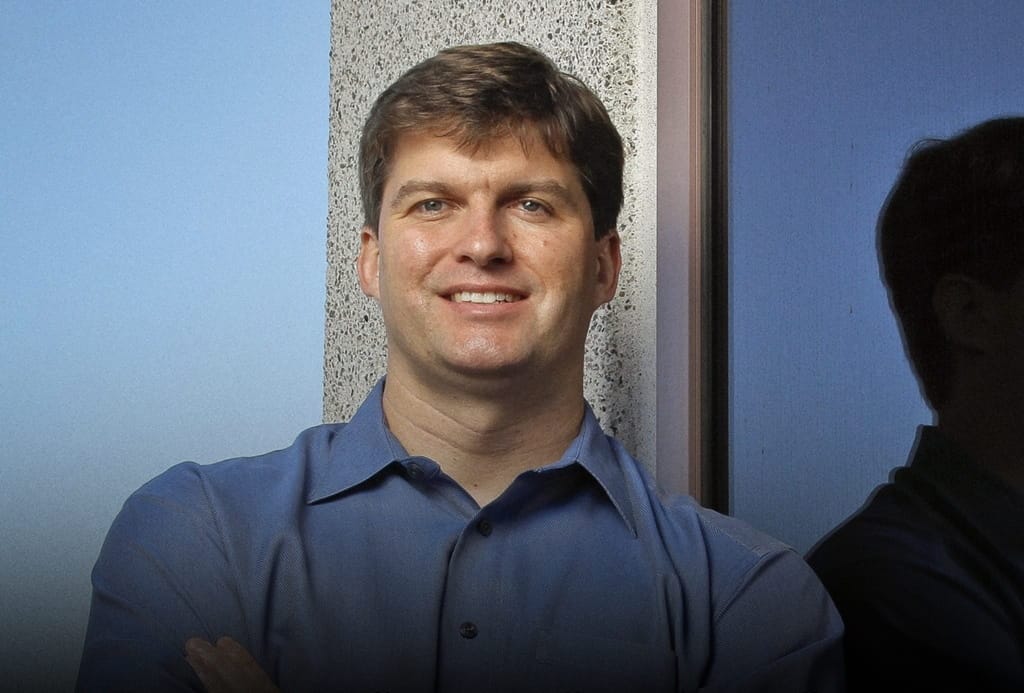
Michael James Burry is one of the most unusual figures in the history of American investing.
He trained as a medical doctor, left his residency to start a hedge fund with borrowed money, and then made one of the most prescient and profitable bets in Wall Street history.
His story is not one of inherited wealth or Ivy League connections but of relentless independent research and the willingness to stand alone against the crowd.
Burry first attracted serious attention in the early 2000s, when his fund posted extraordinary gains during the dot-com collapse by shorting overvalued technology stocks.
That contrarian instinct led him deeper into financial research and eventually toward the subprime mortgage market, where he saw something almost no one else wanted to see.
Few investors in history have been proven so right, so publicly, about something so consequential.
His story reached mainstream audiences through Michael Lewis’s 2010 book The Big Short, and again through the 2015 Academy Award-winning film adaptation, where actor Christian Bale portrayed him.
Since then, Burry has remained a closely followed figure whose public warnings about financial bubbles attract attention from investors and journalists around the world.
In November 2025, Burry closed Scion Asset Management and launched a Substack newsletter called Cassandra Unchained, a name drawn from the Greek mythological figure cursed to make true prophecies that no one believed.
The newsletter has become his primary platform for sharing his views on markets, AI valuations, and economic history.
Early Life of Michael Burry
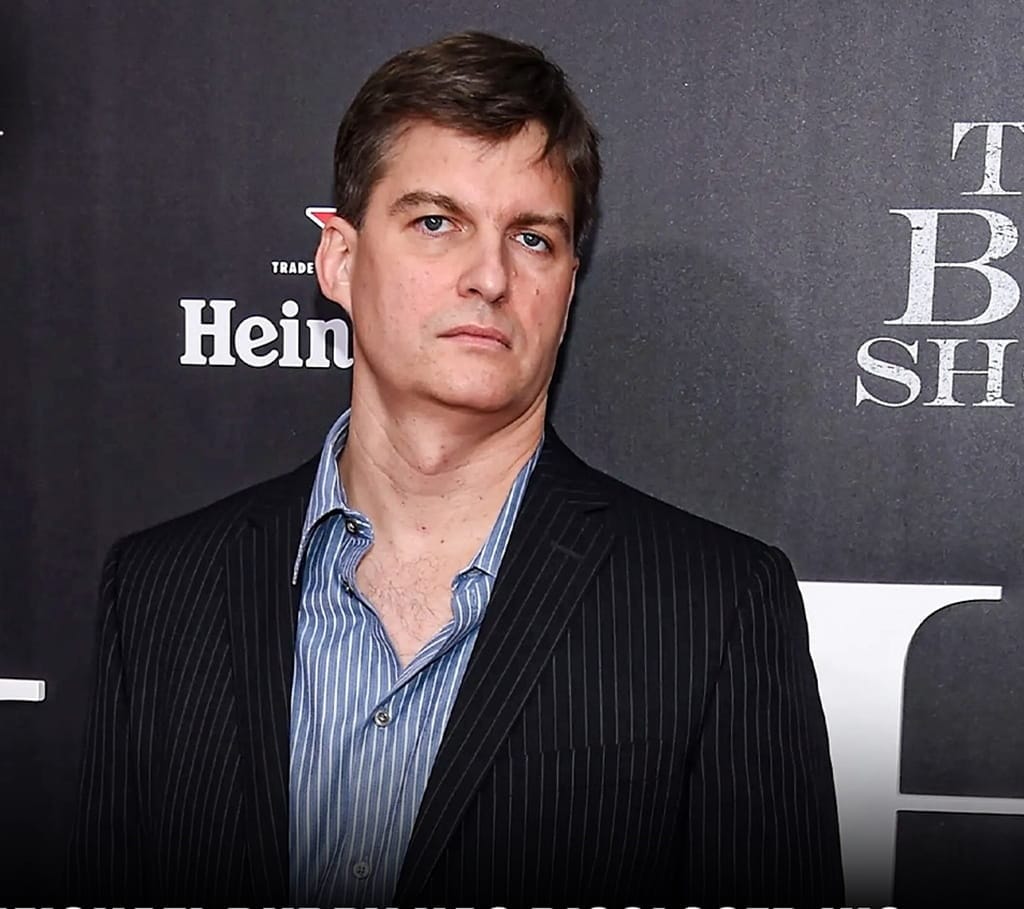
Michael Burry was born on June 19, 1971, in San Jose, California.
At the age of two, he was diagnosed with retinoblastoma, a rare cancer of the eye, which resulted in the loss of his left eye. He has worn a prosthetic eye ever since.
Growing up with that difference shaped him in ways he has spoken about publicly, making him more inward-looking and self-reliant than most of his peers.
He attended Santa Teresa High School in San Jose, where he developed an early fascination with numbers and markets.
His childhood was largely defined by solitary intellectual pursuits rather than social activity, a trait that would later become central to how he processed financial data and built investment theses.
That capacity for deep, independent thinking set the foundation for everything that followed.
Michael Burry Age / Birthday
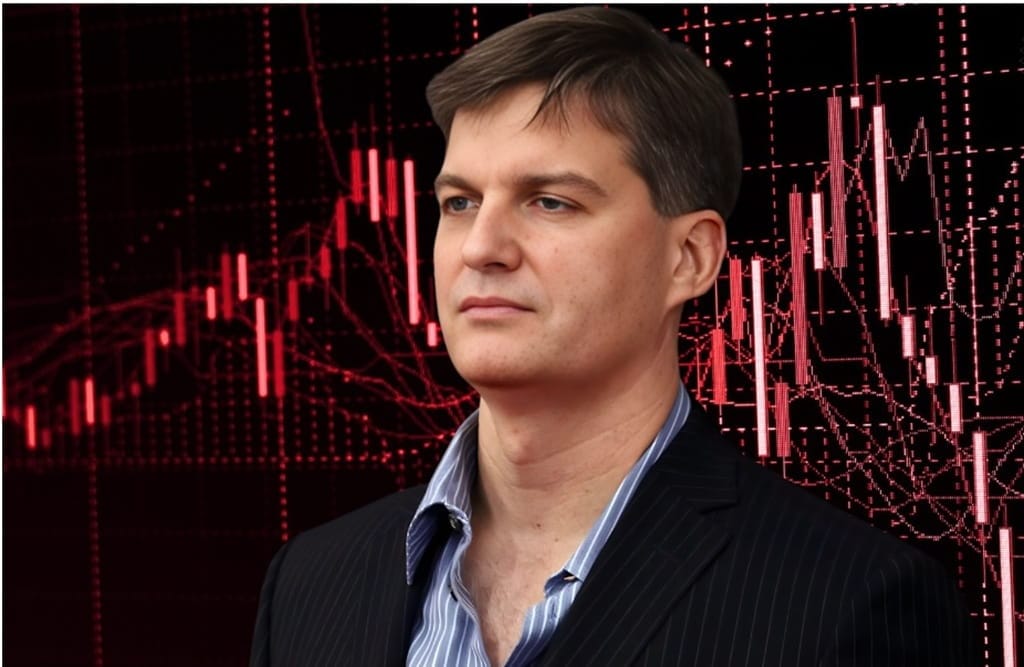
Michael Burry is 55 years old as of 2026, born on June 19, 1971. His zodiac sign is Gemini, a sign often associated with intellectual curiosity and analytical depth.
Both qualities have been visible throughout his career as an investor who processes vast quantities of financial data in search of hidden truths.
Michael Burry Ethnicity and Nationality
Michael Burry is an American national of Rusyn descent, with ancestry from the Rusyn people of Central Europe.
He was born and raised in California and holds American citizenship. His heritage has rarely been discussed publicly.
Michael Burry Height and Weight
Michael Burry stands at 5 feet 7 inches, which is equal to 170cm or 1.70m, while his weight is around 75 kg or 165 lbs.
He has brown hair and blue eyes, with white-toned skin.
Michael Burry Education
Burry studied economics and pre-medicine at the University of California, Los Angeles, earning his bachelor’s degree there.
He then attended Vanderbilt University School of Medicine, where he earned his medical degree.
During those years at medical school, he began what would become a parallel obsession with financial markets, reading and posting investment analysis in his spare time.
After completing his MD, Burry moved to Stanford, where he began a neurology residency at Stanford Hospital and Clinics.
It was during that residency that his financial writing on message boards like Silicon Investor attracted serious attention from professional investors. His stock picks were so accurate that fund managers began seeking him out directly.
That recognition convinced him to leave medicine entirely and pursue investing full time.
Michael Burry Career
From Medicine to Wall Street (1996-2000)
While still in medical school and later during his residency, Burry spent his rare off-hours writing detailed stock analysis on financial message boards.
His approach was rooted in value investing principles drawn from Benjamin Graham and David Dodd’s Security Analysis, the foundational text that shaped investors like Warren Buffett.
He focused on identifying stocks trading well below their intrinsic value, a method he later described as finding a margin of safety.
His online posts attracted the attention of institutional investors, including Joel Greenblatt’s Gotham Capital, which offered him funding to start his own fund.
By late 2000, Burry left his Stanford residency and launched Scion Capital with a small amount of his own money, family loans, and outside capital from those who had followed his work.
The name Scion was chosen deliberately, evoking the idea of cultivating growth from a single strong root.
Scion Capital and the Dot-Com Era (2000-2004)
Scion Capital’s performance in its early years was remarkable. In 2001, its first full year, the S&P 500 fell nearly 12 percent as the dot-com bubble deflated. Scion rose 55 percent.
In 2002, when the S&P fell again by more than 22 percent, Scion was up 16 percent. In 2003, as the market recovered by 28 percent, Scion gained more than 50 percent by shorting overvalued technology stocks.
By 2004, Scion was managing approximately $600 million in assets. Burry had turned away new investors because the fund had grown faster than he could prudently manage.
Those early years cemented his reputation as one of the most gifted stock pickers of his generation.
The Big Short: Betting Against the Housing Market (2005-2008)
Beginning in 2004 and 2005, Burry began noticing something deeply troubling in the US mortgage market.
He studied thousands of individual mortgage loan files and identified a pattern of reckless lending to borrowers who could not afford the homes they were buying.
He concluded that a massive housing bubble had formed and that when the adjustable-rate mortgages reset to higher rates, defaults would explode.
To profit from this, Burry needed a financial instrument that would pay out when mortgage-backed securities collapsed.
He approached major investment banks, including Goldman Sachs, and persuaded them to create credit default swaps on subprime mortgage bonds for him.
He was, in effect, buying insurance against bonds that everyone else believed were safe. By October 2005, Scion Capital had accumulated over one billion dollars in credit default swap exposure.
The position nearly destroyed him before it saved him.
For almost two years, Burry faced furious pressure from his own investors. The housing market kept rising.
His fund was losing money paying premiums on the swaps. Several investors tried to withdraw their capital, and some threatened legal action. Burry held firm.
In 2007, as delinquency rates in subprime mortgages began spiking, the bonds he had bet against started to collapse in value. He began liquidating the credit default swaps at enormous profit.
By the time he exited the position in early 2008, Burry had made $100 million personally and generated $725 million for his investors.
From its inception in November 2000 through its closure in 2008, Scion Capital produced a total return of 489.34 percent, net of fees and expenses.
Disheartened by the pressure from investors and exhausted by the ordeal, Burry shut Scion Capital down in 2008.
Scion Asset Management and Later Bets (2013-2025)
After a period away from managing outside capital, Burry returned to investing in 2013 with a relaunched firm called Scion Asset Management.
He kept the fund small and highly selective about its investors. His approach remained unchanged: deep, independent research, contrarian bets, and high conviction positions.
In 2019 and 2020, Burry quietly built a position of roughly three million shares in GameStop, a struggling video game retailer he believed was deeply undervalued.
His analysis pointed to the company’s strong cash reserves and the potential for a buyback to unlock shareholder value.
That position anticipated the famous 2021 GameStop short squeeze, during which the stock price surged dramatically as retail traders on Reddit coordinated to squeeze out short sellers.
In more recent years, Burry placed large bearish bets against technology companies he viewed as overvalued, including put options against Palantir and Nvidia.
He argued that the hype surrounding artificial intelligence resembled the dot-com bubble, and that major technology companies were understating the costs of their AI infrastructure investments.
In October 2025, Burry wrote to his investors that his view of value in securities was no longer in sync with the markets and announced the closure of Scion Asset Management. The fund’s SEC registration was terminated on November 10, 2025.
Cassandra Unchained (2025-Present)
On November 23, 2025, Burry launched a paid Substack newsletter called Cassandra Unchained.
He named it after the Greek mythological figure Apollo cursed to see the future but never be believed, a reference Warren Buffett had once applied to Burry himself.
The newsletter, priced at $39 per month, focuses on stock analysis, market bubbles, economic history, and investment case studies drawn from his 25 years of experience.
In early editions, Burry drew comparisons between the current AI investment boom and historical speculative manias.
He also argued that major technology companies were misstating the economic life of their AI infrastructure to inflate reported earnings. The newsletter has drawn significant attention from investors and financial journalists.
Michael Burry Companies and Investments
Scion Capital and Scion Asset Management were the two main vehicles through which Burry managed outside capital over his career.
Both were based in California, and both reflected his preference for running a small, concentrated operation rather than a large institutional fund.
Beyond formal fund management, Burry has invested personally in a wide range of assets. He has spoken publicly about investments in water rights and farmland, which he views as essential long-term resources in a world of population growth and resource scarcity.
Those positions reflect his willingness to look far beyond conventional equity markets.
His current activity is centred on Cassandra Unchained, where he writes and publishes investment analysis independently, without the regulatory obligations that came with managing a registered fund.
Michael Burry Business Achievements
Burry’s most significant achievement is his prediction and profitable bet against the US housing market ahead of the 2008 financial crisis.
It stands as one of the most successful contrarian trades in modern financial history and earned him recognition across the global investment community.
His early performance at Scion Capital during the dot-com era also marked him as a generational talent in value investing.
Delivering positive returns of 55 percent in 2001, while the broader market fell sharply, demonstrated a quality of analysis that went well beyond luck.
The Big Short brought his work to a global audience and made his name synonymous with independent, data-driven thinking in finance.
Michael Burry Wife
Michael Burry has been married twice. His first wife was of Korean descent. The marriage ended before his career took off. He has not spoken publicly about the details of that relationship.
His current wife, commonly referred to as Cassandra Burry, is of Vietnamese-American heritage.
Burry has said they met through an online dating profile in which he described himself candidly as a medical student with one eye, an awkward social manner, and $145,000 in student loans.
She wrote back, and they have been together since. The family lives in Saratoga, California.
Michael Burry Children
Michael Burry has two children. His son Nicholas was diagnosed with Asperger syndrome.
After researching the condition following his son’s diagnosis, Burry concluded that he himself shares many of the same traits, including intense focus on specific subjects, difficulty with eye contact, and a preference for solitude over social interaction.
He has spoken about this publicly on several occasions.
His family life has remained largely private. He has consistently kept his children and wife out of the public spotlight, even as his own profile has grown dramatically.
Michael Burry Net Worth
Michael Burry’s estimated net worth is $300 million as of 2026. The largest single source of his wealth was the 2007 to 2008 housing market trade, which generated a personal profit of $100 million.
His management fees from Scion Capital over its years of operation, combined with the strong early returns of the fund, added substantially to that base.
Since 2013, income from Scion Asset Management’s management and performance fees contributed to his wealth, alongside his own personal investments in equities, farmland, and water rights.
His Cassandra Unchained newsletter, priced at $39 per month for subscribers, now represents his primary active business.
Michael Burry Social Media
Michael Burry is active on X (formerly Twitter) under the handle @michaeljburry. His profile is titled Cassandra Unchained, consistent with his newsletter.
He posts market commentary, warnings about financial bubbles, and observations about economic policy.
His posts regularly generate significant attention from investors, journalists, and retail traders worldwide.
His primary publishing platform is now his Cassandra Unchained Substack, where he writes long-form investment analysis and commentary.
He has described the newsletter as his sole focus going forward.
Conclusion
Michael Burry’s career is a study in what happens when a deeply independent mind refuses to follow the crowd, even when the crowd is Wall Street itself.
His prediction of the 2008 financial crisis stands as one of the most consequential trades in modern financial history, and his willingness to close Scion and speak freely suggests that chapter may not be the last word on his legacy.