
Ronnie Spector was an American singer and the iconic lead voice of the Ronettes, the 1960s girl group whose sound defined an era and whose influence stretched across generations of rock and pop music.
She co-wrote and recorded some of the most beloved pop songs ever made, including “Be My Baby,” and was later recognized by Rolling Stone as one of the 200 Greatest Singers of All Time.
Who is Ronnie Spector?
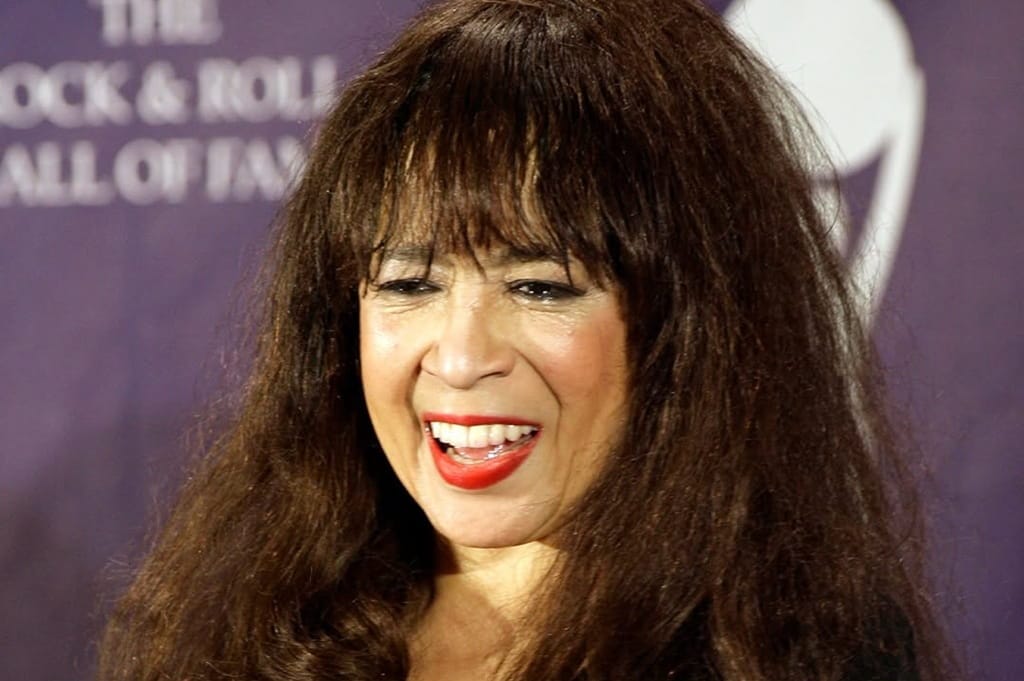
Ronnie Spector was born Veronica Yvette Bennett in New York City.
She grew up to become the lead singer of the Ronettes, a girl group that conquered the charts in the 1960s and forever changed the sound of popular music.
She was known for her powerful voice, her signature beehive hairstyle, and a fearless stage presence that earned her the title of the original “bad girl of rock and roll.”
Her life was also defined by serious hardship. She survived a deeply abusive marriage to record producer Phil Spector and spent years rebuilding her career and her identity.
She eventually found happiness in a second marriage and raised five children.
Her memoir Be My Baby, published in 1990 and updated just before her death, became one of the most celebrated rock autobiographies ever written.
Rolling Stone contributor Rob Sheffield named it one of the greatest rock memoirs of all time. Ronnie Spector died on January 12, 2022, at the age of 78.
Early Life of Ronnie Spector
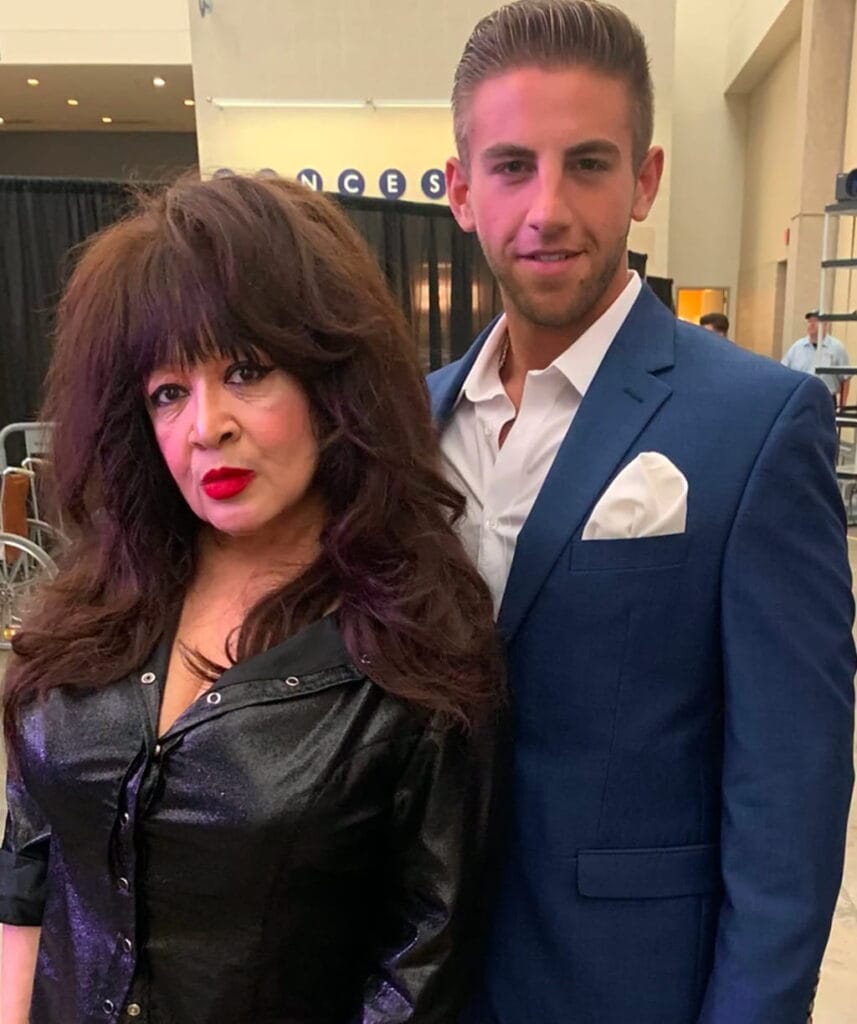
Ronnie Spector was born and grew up in the Washington Heights section of Manhattan, in New York City.
Her parents, Beatrice and Louis Bennett, were both African American. Her father worked as a subway worker and left the family when Ronnie was still in grade school.
She grew up alongside her older sister, Estelle Bennett, in a household where music was encouraged. Their cousin Nedra Talley was also a regular presence in their lives.
The three girls began singing together from an early age, performing at school events and in their neighborhood.
Their look was fashioned early on, partly through Estelle’s job at the Macy’s cosmetics counter. The group built their signature style before they ever set foot on a professional stage.
Ronnie Spector Age / Birthday
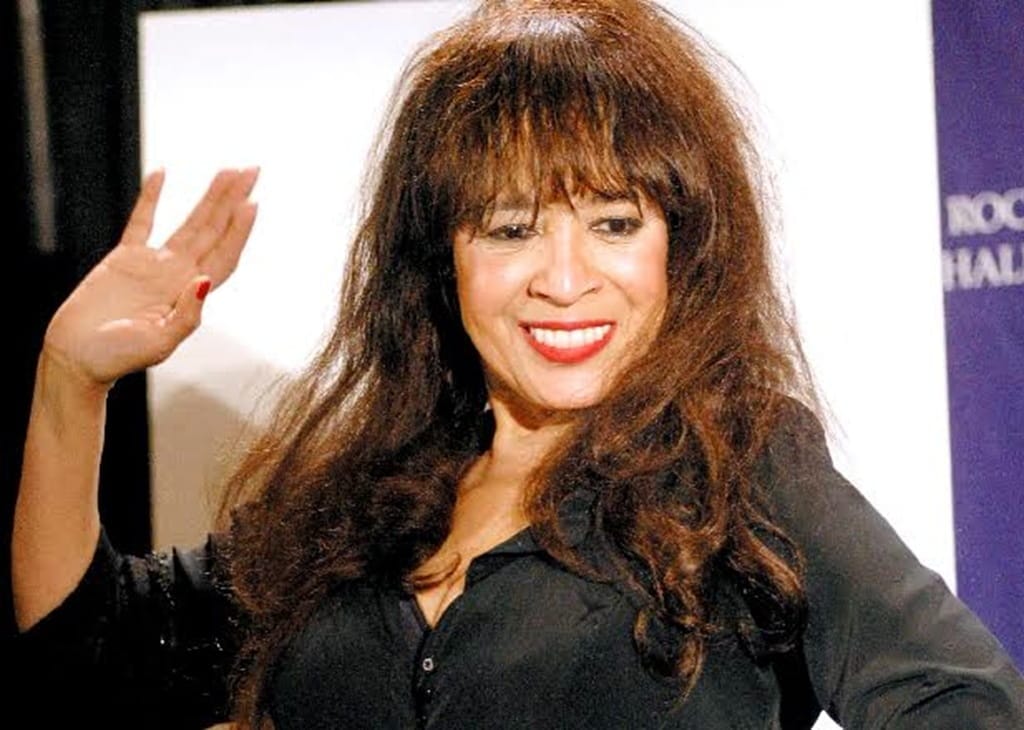
Ronnie Spector was born on August 10, 1943, and died on January 12, 2022, at the age of 78.
Her zodiac sign was Leo, a sign associated with natural performance ability, charisma, and an unshakeable presence.
All of those qualities defined her work on stage and on record throughout her six-decade career.
Ronnie Spector Ethnicity and Nationality
Ronnie Spector was an African American woman and an American citizen, born and raised in New York City. Both of her parents were African American.
Her cultural background and upbringing in the vibrant music scene of mid-century New York shaped every aspect of her sound and style.
Ronnie Spector Height and Weight
Ronnie Spector stood at approximately 5 feet 1.5 inches, which is equal to 156cm or 1.56m, while her exact weight is not revealed.
She had brown hair and brown eyes.
Ronnie Spector Education
Ronnie Spector attended George Washington High School in Washington Heights, Manhattan, the same neighborhood where she grew up.
It was during her high school years that the Ronettes began to take shape as a performing group.
While still students, Ronnie, Estelle, and Nedra sang at school events and performed at the Peppermint Lounge, a well-known Manhattan nightspot that was considered the birthplace of the Twist and go-go dancing.
Their time together as teenagers was the foundation of everything that followed.
Ronnie Spector Musical Style and Influences
Ronnie Spector’s voice was widely described as powerful, emotive, and almost operatic, capable of carrying heartbreak and joy in the same breath.
She had a natural vibrato and an intensity that set her apart from other singers of her era.
She was heavily influenced by the gospel and rhythm and blues music she grew up hearing in New York.
Her approach to pop singing brought raw feeling into a genre that sometimes prioritized polish over emotion.
Her influence ran in all directions. Brian Wilson of the Beach Boys became famously obsessed with “Be My Baby” and its production. Amy Winehouse emulated Ronnie’s voice and beehive hairstyle.
Canadian music critic Carl Wilson wrote that Ronnie Spector was the first woman in rock to provoke anything like the hysteria that Elvis had caused.
She gave those who came after a blueprint for what a powerful female voice in rock could sound like.
Ronnie Spector Career
The Ronettes (1959-1967)
Ronnie, her sister Estelle, and their cousin Nedra Talley formed the group originally called the Darling Sisters in the late 1950s.
They became a popular live attraction around the New York area before landing their first recording deal with Colpix Records, where early singles failed to chart.
Their career changed when they tracked down record producer Phil Spector and signed to his Philles Records label in 1963. The result was one of the most explosive breakthroughs in pop music history.
Their debut single for Philles, “Be My Baby,” co-written by Ronnie Spector, Jeff Barry, and Ellie Greenwich, peaked at number 2 on the Billboard Hot 100. It remains one of the most recognizable and celebrated pop records ever made.
A string of top 40 hits followed: “Baby, I Love You” (1963), “The Best Part of Breakin’ Up” (1964), “Do I Love You?” (1964), and “Walking in the Rain” (1964), which later won a Grammy Award.
The group also contributed three songs to Phil Spector’s beloved holiday record A Christmas Gift for You (1963), now considered one of the greatest Christmas albums of all time.
The Ronettes’ success was international. In 1965, they were voted the third top singing group in England, behind only the Beatles and the Rolling Stones.
They toured England with the Rolling Stones and formed friendships with the Beatles. The group broke up in early 1967 after a European concert tour.
The Phil Spector Marriage and Its Aftermath (1968-1980)
After the Ronettes disbanded, Ronnie married Phil Spector on April 14, 1968, at Beverly Hills City Hall. She took his surname professionally and became known as Ronnie Spector.
What followed was years of psychological torment that she later described in detail.
According to her memoir, Phil forbade her from performing, surrounded their home with barbed wire and guard dogs, and confiscated her shoes to prevent her from leaving.
He allegedly installed a gold coffin in the basement and threatened to kill her if she ever left.
She fled the mansion barefoot in 1972, with the help of her mother.
“I knew that if I didn’t leave I was going to die there,” she said.
Their divorce was finalized in 1974. In the settlement, Ronnie forfeited all future royalty earnings from her recordings, alleging that Phil had threatened to have her killed if she did not.
She received $25,000, a used car, and monthly alimony of $2,500 for five years.
She reformed a version of the Ronettes in the 1970s and began rebuilding her solo career, releasing her debut solo album Siren in 1980.
Solo Career and Comeback (1982-2022)
Ronnie’s career experienced a major revival in 1986 when she was featured on Eddie Money’s hit “Take Me Home Tonight,” a Billboard Top 5 single in which she reprised the opening line of “Be My Baby.”
The song’s music video received heavy rotation on MTV and introduced her voice to a new generation of listeners.
She released the album Unfinished Business in 1987, and in 1988 she began hosting her annual Ronnie Spector’s Christmas Party at B.B. King Blues Club and Grill in New York City, a seasonal tradition she maintained for years.
Her 1990 memoir Be My Baby brought her story to an even wider audience and is now considered one of the landmark rock autobiographies of all time.
In 1999, she released the EP She Talks to Rainbows, produced by Joey Ramone. Later albums included Something’s Gonna Happen (2003), The Last of the Rock Stars (2006), and English Heart (2016), her final studio album.
English Heart peaked at number 6 on the Billboard Top Heatseekers chart and featured her interpretations of classic British Invasion songs by the Beatles, the Rolling Stones, and others.
She remained active as a performer and recording artist until nearly the end of her life.
Ronnie Spector Discography
Solo Albums:
| Year | Title | Label |
|---|---|---|
| 1980 | Siren | RCA / Polish Records |
| 1987 | Unfinished Business | Columbia/CBS |
| 2006 | The Last of the Rock Stars | High Coin |
| 2016 | English Heart | 429 Records |
Selected Ronettes Albums:
| Year | Title |
|---|---|
| 1964 | Presenting the Fabulous Ronettes Featuring Veronica |
| 1975 | Sing Their Greatest Hits |
| 1992 | The Best of The Ronettes |
Ronnie Spector Awards and Recognition
Spector received some of the highest honors in music over the course of her career.
- The Ronettes were inducted into the Vocal Group Hall of Fame in 2004.
- “Be My Baby” was added to the National Recording Registry at the Library of Congress in 2006, recognizing it as a culturally, historically, or aesthetically significant recording.
- The Ronettes were inducted into the Rock and Roll Hall of Fame in 2007, presented by Keith Richards of the Rolling Stones, who said the group could “sing all the way right through a wall of sound.”
- In 2023, Rolling Stone ranked Ronnie Spector at number 70 on its list of the 200 Greatest Singers of All Time.
Her memoir Be My Baby was also named one of the greatest rock biographies of all time by Rolling Stone.
Ronnie Spector Husband
Ronnie Spector was married twice.
Her first marriage was to record producer Phil Spector, whom she wed on April 14, 1968. The marriage was deeply troubled.
In her memoir, Ronnie described years of psychological abuse, isolation, and threats to her life. She escaped in 1972 and filed for divorce, which was finalized in 1974.
Phil Spector was convicted in 2009 of the second-degree murder of actress Lana Clarkson and was sentenced to 19 years to life in prison. He died in January 2021.
Ronnie married her manager, Jonathan Greenfield, in 1982. Their marriage lasted until her death in January 2022.
She was with Jonathan at the time of her passing, as confirmed by her family’s statement: “She was with family and in the arms of her husband, Jonathan.”
Jonathan Greenfield not only supported her personal life but also played a key role in reviving her career as a live performer.
The couple settled in Danbury, Connecticut, where she spent her later years.
Ronnie Spector Children
Ronnie Spector had five children in total, from both of her marriages.
During her marriage to Phil Spector, the couple adopted three sons. They adopted Donté Phillip Spector in 1969. Phil then surprised Ronnie at Christmas with adopted twins, Louis Phillip Spector and Gary Phillip Spector, born May 12, 1966.
After Ronnie’s escape and divorce, her relationship with the adopted sons was complicated by years of Phil’s controlling behavior, though she maintained ties to them.
With her second husband, Jonathan Greenfield, Ronnie had two biological sons: Jason Charles Greenfield and Austin Drew Greenfield. Those relationships were described as more stable and positive.
Spector is survived by her husband Jonathan and her sons Jason and Austin, as well as her adopted sons Donte, Louis, and Gary.
Ronnie Spector Net Worth
Ronnie Spector’s estimated net worth was $5 million at the time of her death in 2022.
Her wealth came from a career spanning more than six decades, including royalties from her recordings as a member of the Ronettes, income from her extensive touring career, and her work as a solo artist.
Her financial history was complicated by her abusive first marriage. In the 1974 divorce settlement, Ronnie forfeited all future royalties from her recordings under duress.
Later, the Ronettes sued Phil Spector for $10 million in unpaid royalties in 1988. After a lengthy legal battle, Phil was ultimately ordered to pay in excess of $1 million to Ronnie.
She also earned income from book royalties, speaking engagements, and her annual Christmas concert residency in New York City, which ran from 1988 until close to her death.
Ronnie Spector Cause of Death
Ronnie Spector died on January 12, 2022, in Danbury, Connecticut, at the age of 78.
Her family confirmed that she died after a brief battle with cancer. No further details about the type of cancer were publicly disclosed.
Her family released a statement through her official website that read: “Our beloved earth angel, Ronnie, peacefully left this world today after a brief battle with cancer.”
The family requested that donations be made to local women’s shelters or to the American Indian College Fund instead of flowers.
Her death prompted an outpouring of tributes from across the music world. Brian Wilson, Stevie Van Zandt, Diane Warren, and many others shared their grief publicly.
Following her passing, the BBC broadcast a special tribute compilation called Ronnie Spector at the BBC.
Conclusion
Ronnie Spector built a legacy that outlasted every obstacle placed in her path, from the hit factory of 1960s pop to a brutal marriage, a hard-fought comeback, and a final body of work completed just weeks before she died.
Her voice remains one of the most distinctive and emotionally powerful in the history of popular music.